
The Douglas County Court Calendar
The county's Judicial Courts Calendar page gives you two entry points: Superior Court and Judicial Court. Pick one and the public widget appears. Sometimes it shows nothing at all for the view you selected. That blank screen proves nothing. It only means the chosen calendar has no events published through that view at that moment, not that no court work is happening.
Douglas County also posts monthly PDF calendars for each judge, sorted by weekday, date, time, judge, and setting type. They help you spot a published event. But a PDF may leave out case numbers and party names, so treat it as a schedule, not a complete register of every case.
Douglas County Calendar Publication
Think of the county calendar as a publication index. It is not one database holding every hearing. Start with the Superior Court or Judicial Court selection. Move to the assigned judge's page once you know the judge or case type. A widget with no event means your next step is a case search and direct confirmation. Never conclude from it that the case was canceled.
Chief Judge Cynthia C. Adams's official page is one of these judge and court sources. It adds useful context to how the local calendar is organized.
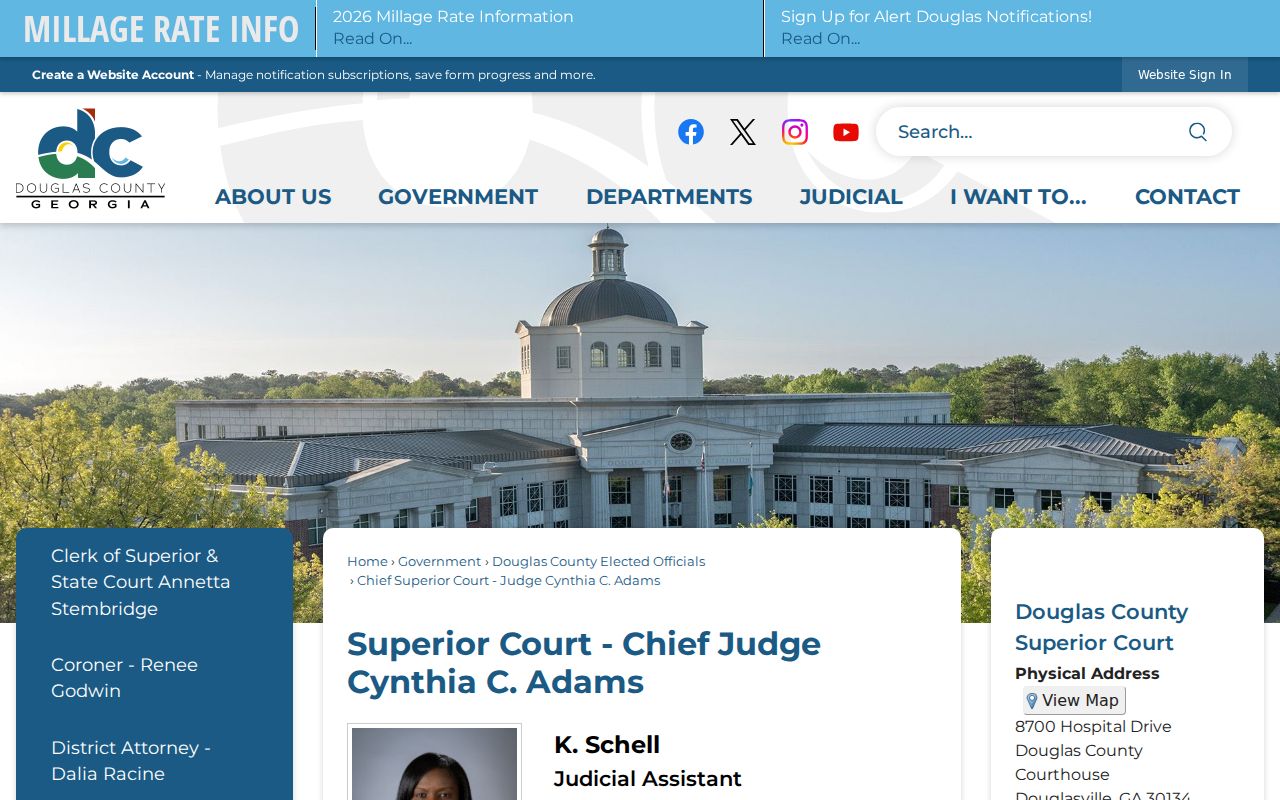
This page acts as a source directory for Douglas County court information. It is not a private case setting or a complete daily docket.
How to Find Your Court Date
Run the county public search when you have a case number, party name, or citation. Then check the result against the assigned judge's current PDF calendar. The Douglas County case search fills in case and court details that a monthly PDF often leaves out.
- Start with the county Case Management Search and search by case number first, or by name and filed-date range.
- Note the court, case type, judge, filing date, and any next setting displayed in the result.
- Open the assigned judge’s current calendar page or monthly PDF and compare the date, time, and event type.
- Confirm with the correct calendar clerk or Records Room when the search result and PDF differ.
- Check the citation, court notice, attorney, or court order for the controlling date, time, and location before appearing.
Georgia Courts' eAccess directory can help you spot county courts in the statewide access system. It does not promise a separate statewide hearing feed. For final confirmation, use what the court directs. That may be a Records Room counter, a calendar clerk by phone or email, a courtroom posting, or a same-day docket call. Keep your attorney or party court notice close. A public calendar may not show the case number at all.
Douglas County Judge Calendar PDFs
Judge pages publish calendar material in different forms. Judge Warren's January 2026 sample is organized by weekday, date, time, and event type, covering criminal case-management status and pleas, criminal arraignment, probation revocations, TPOs, domestic and civil motions, specially set criminal motions, drug-court staffing, drug court, and calendar calls. Each label describes scheduled work. It says nothing about the result of the case.
Judge Wallace's page links 2026 calendars and names a case manager. Judge Kiger's page covers ready short lists, civil jury calendars, and Cisco Webex participation. Calendars change, so grab the current file and confirm directly when your case is missing or a newer version appears.
The Chief Judge Adams source page shows the same pattern: a judge page works best as a local directory of calendar materials.
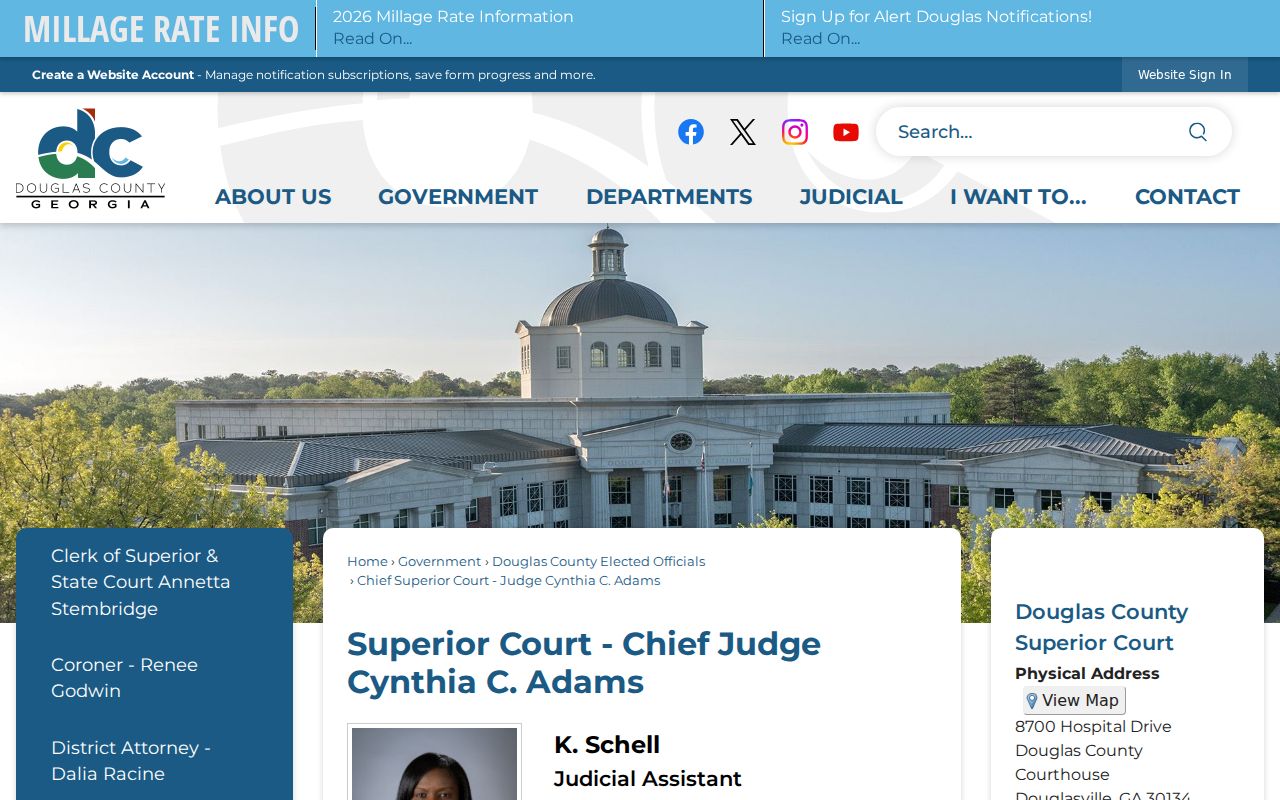
Each judge page adds context to the calendar system. The case-specific date still comes from the court's current record and its confirmation channel.
Reading a Court Setting
Every Douglas County court setting breaks into parts. The date marks the assigned day. The time may be a docket call or an individual setting. The courtroom tells you where the court expects the matter. The judge or court name identifies the presiding assignment. The setting type names the event: arraignment, motion, trial, calendar call, TPO, or another category.
A calendar PDF may omit the case number and party name. Match the setting against the case search, your notice, or your attorney before relying on it. A setting type is not a judgment. And a date on a PDF does not prove the case still sits on that calendar.
| Date | The scheduled calendar day. Check the newest calendar or case record for a changed date. |
|---|---|
| Time | The listed hour, which may describe a docket call, a group calendar, or an individual setting. |
| Courtroom | The courtroom or court location identified by the court. Do not infer a room from a different judge’s page. |
| Judge | The assigned judge or court division named in the published schedule or case record. |
| Setting Type | The event category, such as arraignment, motion, TPO, calendar call, jury list, or trial. |
Douglas County Calendar Setting Terms
Calendar words can masquerade as outcomes. They are only scheduling labels. Douglas County's materials use several terms with distinct procedural meanings, so read each one as a description of the court event unless the case docket or an order says more.
- Calendar call
- A scheduled call used to organize cases for trial or later settings.
- Case management status or pleas
- A criminal case-management setting. It does not itself show that a plea was accepted or a case was closed.
- Specially set motion
- A motion placed on a designated hearing slot, often with separate scheduling instructions.
- Drug-court staffing and drug court
- Separate calendar lines in the January 2026 sample. Staffing and a program setting are not the same event.
- Ready list or civil jury list
- Judge Kiger’s calendar materials use these terms for trial-readiness or jury scheduling work.
Judge James Kiger's official page also posts Webex instructions for some Superior Court hearings. Remote participation depends on the court's direction, and a calendar entry alone never guarantees it.
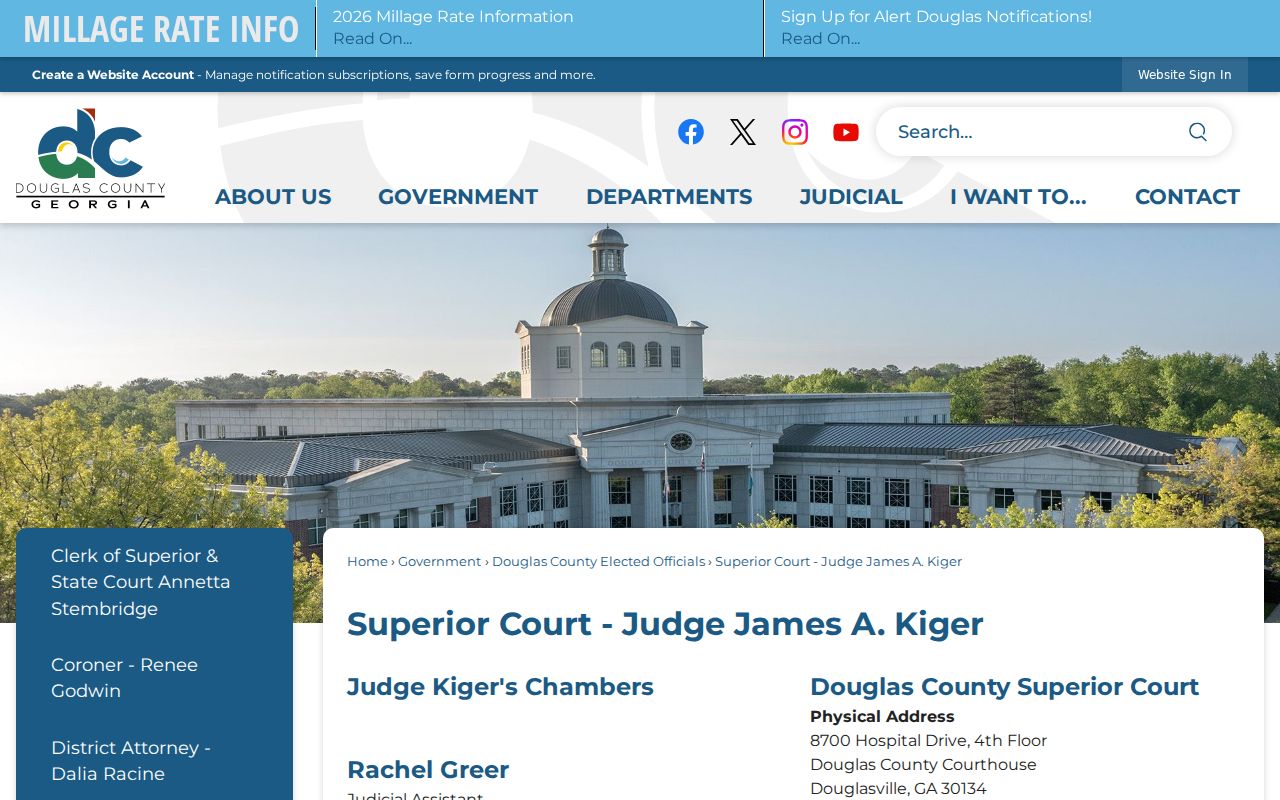
The Kiger source shows how one judge's page can pair calendar lists with participation rules that apply only to specified hearings.
Resets, Continuances, and Cancellations
Court dates in Douglas County shift for many reasons. A continuance, a reset, a revised calendar, consent, legal cause, or a court order can each move a setting. The old date may linger in the docket history while a newer one becomes current. Even a calendar PDF gets revised, as the county's separate 2026 calendar files demonstrate. Before trusting any download, compare the date, the judge, the case information, and the version you hold. If a setting moved or was canceled, confirm the new court date directly. Contact the assigned calendar clerk, the Clerk's Records Room, or counsel. Magistrate instructions require consent or legal cause before a set date can be continued. Report any address change to the Clerk in writing. The court date arrives by mail. For traffic and other appearance dates, the citation or court order controls.
Douglas County Calendar Clerks
Judge Fortner's page splits calendar contacts between criminal and civil. Joanne Woods serves as the criminal calendar clerk, reachable at 770-489-7327 and jwoods@douglascountyga.gov. Anice Johnson handles the civil calendar, at 770-489-5231 and ajohnson@douglascountyga.gov. A case search and a judge's PDF can disagree. When that happens, these are the people who can sort out which calendar entry stands.
Calendar confirmation
State Judge Brian Fortner’s calendar page
Criminal: 770-489-7327
jwoods@douglascountyga.gov
Civil: 770-489-5231
ajohnson@douglascountyga.gov
State Court arraignment waivers carry their own filing deadline: at least 24 hours before the scheduled hearing. That rule is separate from calendar checking. Read the judge's instructions and the case notice together.
Douglas County Remote Calendar Rules
Some Douglas County Superior Court hearings run on Cisco Webex. That option applies only when the assigned judge's own instructions allow it. Judge Kiger's page adds a firm limit: anyone who cannot take part remotely must show up in person. A line on the calendar, by itself, never grants remote attendance.
Juvenile Court takes a narrower path. Its virtual-attendance order covers only certain settings. Examples include dependency disposition, the 75-day initial review, periodic four-month reviews, permanency planning, and subsequent-plan hearings. Written requests go to the clerk at least 24 hours ahead of time. Other matters, including preliminary protective, adjudication, termination, and motions settings, are generally held in person under the published direction.
Probate matters travel yet another route. Probate Court's official page covers wills, estates, guardianships, conservatorships, and related cases. Each carries its own calendar through that separate court office.
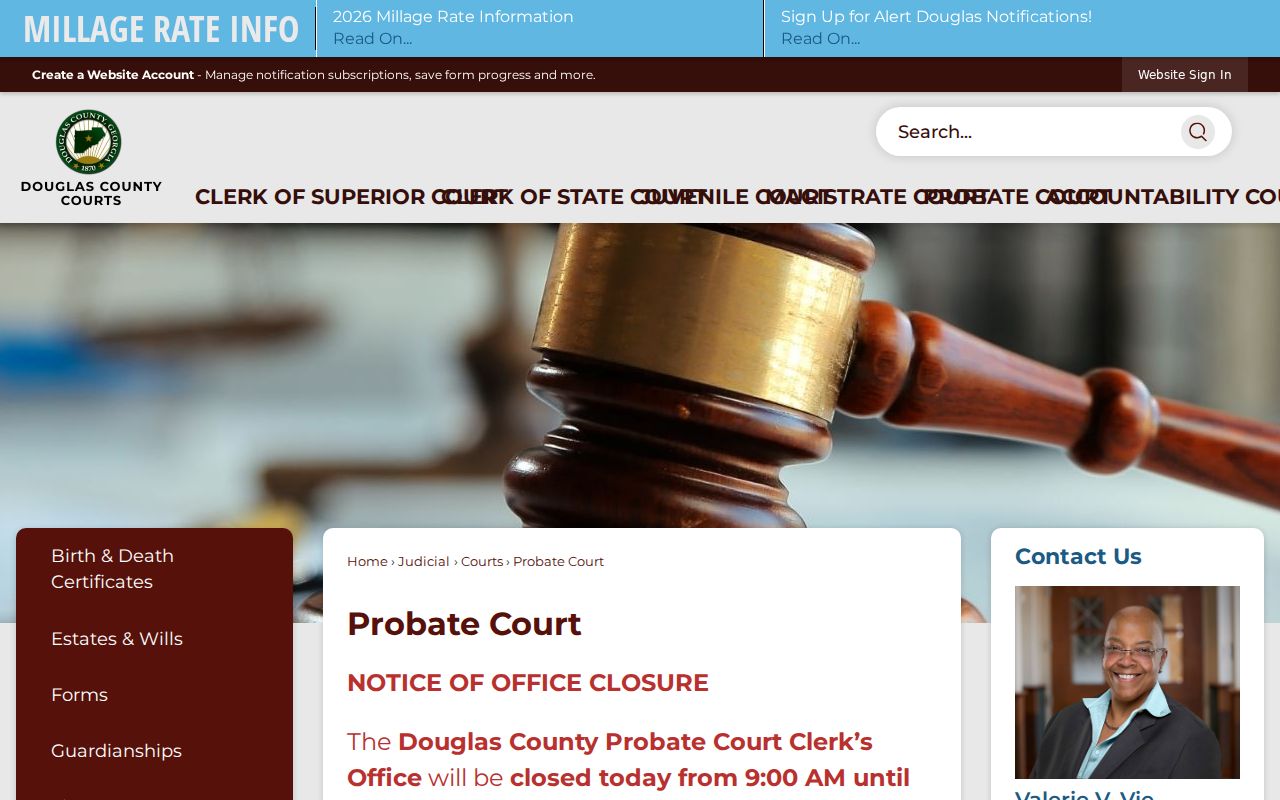
Confirm probate calendar details with Probate Court itself. Never infer them from the Superior or Judicial Courts Calendar selection.
Douglas County Magistrate Calendar Times
Magistrate Court posts recurring criminal hearing times, and they help you get oriented. Bond hearings are listed for Monday at 8:45 a.m. Tuesday through Friday they start at 8:30 a.m. Preliminary hearings appear on the schedule for Thursday at 1:30 p.m. Treat these as a general frame. A specific notice or a confirmation from the court controls the actual case.
Traffic works differently. The date, time, and location sit on the citation or notice itself. Georgia Courts reports no centralized statewide traffic-citation database. City tickets follow the issuing city's court route. So a Douglasville, Austell, or Villa Rica municipal date should never be inferred from the county calendar.
The Douglas County Magistrate Court page is where the recurring hearing information comes from. If a date changes, follow the court's current instructions. The same goes when a notice conflicts with the general schedule.
Judge Lauren Wallace's official page publishes the 2026 calendar materials.
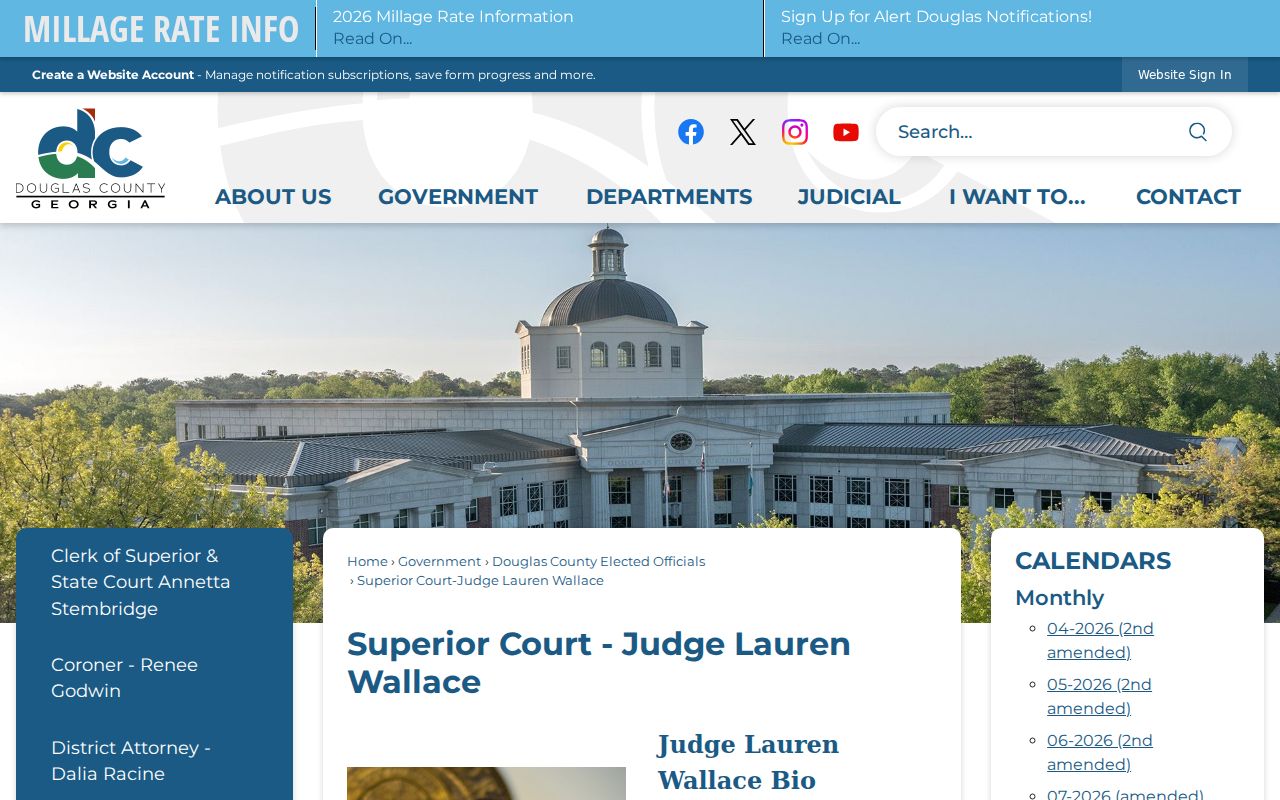
Judge Wallace's calendar page offers another judge-specific 2026 calendar directory. It stands apart from the recurring Magistrate schedule.
What To Do If You Miss a Setting
Act promptly if you miss a Douglas County court setting. Pull up the case record and your notice first. Then reach the correct clerk, calendar clerk, or attorney. That contact can tell you whether the court entered a new date or another order. What comes next depends on the court and the case type.
Missed a setting? A missed court date can create a failure-to-appear issue and may lead to a warrant, bond consequence, or other order under the court’s rules.
Contact the assigned clerk or attorney immediately and ask how the case can be brought before the court for a new setting.
Do not rely on an old PDF or assume that a calendar entry has been canceled. Obtain case-specific legal advice when rights or custody are affected.