
How to Search Criminal Dockets
The county sends the public to the Douglas public Case Management Search. Its criminal route covers index information for State Court and Superior Court. A traffic or ordinance case may instead sit with Douglasville, Villa Rica, or Austell Municipal Court, and juvenile, probate, or Magistrate matters follow a different office path. If a notice shows the exact case number, use it. For name searches, the Clerk's instructions call for LAST NAME, FIRST NAME. Know the charge type too: felony, county misdemeanor, traffic citation, or municipal charge. That knowledge keeps a real case from looking like a missing one.
- Open the county public search and choose the criminal search route.
- Enter the case number first, or use the defendant name in the instructed last-name, first-name format.
- Add an alias, citation, filed-date range, or court checkbox when the first search is too broad.
- Open the matching result and compare the court, judge, filing date, charges, settings, and status.
- Ask the Clerk’s Records Room for a certified copy or older document when the index is not enough.
Douglas County Criminal Search Checks
Check each result against the field that produced it. An exact case number gives the cleanest match. A name search narrows nicely with filed dates and the court checkbox. The Alias and Citation fields offer local ways to reach a record without pulling every name in the system. Treat the alias field as a search control, nothing more. It proves nothing about identity. A citation from Douglasville, Villa Rica, or Austell belongs with that city's court. Check there. When a matter is juvenile or began with a bond or preliminary hearing, contact the separate court rather than reading an empty county result as proof no record exists.
- Compare the court selected in the form with the court named on the notice.
- Use a filed-date range when a common name returns several cases.
- Try Citation or Alias only when that identifier is part of the record you are trying to find.
Douglas County Criminal Search Fields
The criminal form uses local labels that beat a broad name-only search. Visible controls include Case #, Name, Alias, Citation, System Wide Search, Filed From, and Filed To. Checkboxes cover All, Superior Court, and State Court. These controls narrow a Douglas County criminal docket search. They do not prove every Georgia court is inside it. The "System Wide Search" label belongs to the county form alone. For a city citation, try the municipal court route before trusting an empty county result.
| Field | Best use | Search note |
|---|---|---|
| Case # | Known case identifier | Usually the least ambiguous starting point; copy it as issued. |
| Name | Known defendant | Use LAST NAME, FIRST NAME and narrow by court or date. |
| Alias | Alternate name on the criminal record | Search infrastructure only; an alias field is not a finding about a person. |
| Citation | Known citation or traffic reference | Check whether the issuing court is State Court or a city court. |
| System Wide Search | Broader Douglas search option | Keep the county scope in mind; it is not a statewide index. |
| Filed From / Filed To | Known filing period | Useful when a name returns many records or the case is recent. |
Judge Brian Fortner's official page puts the public search alongside calendar and waiver information for State Court criminal work.
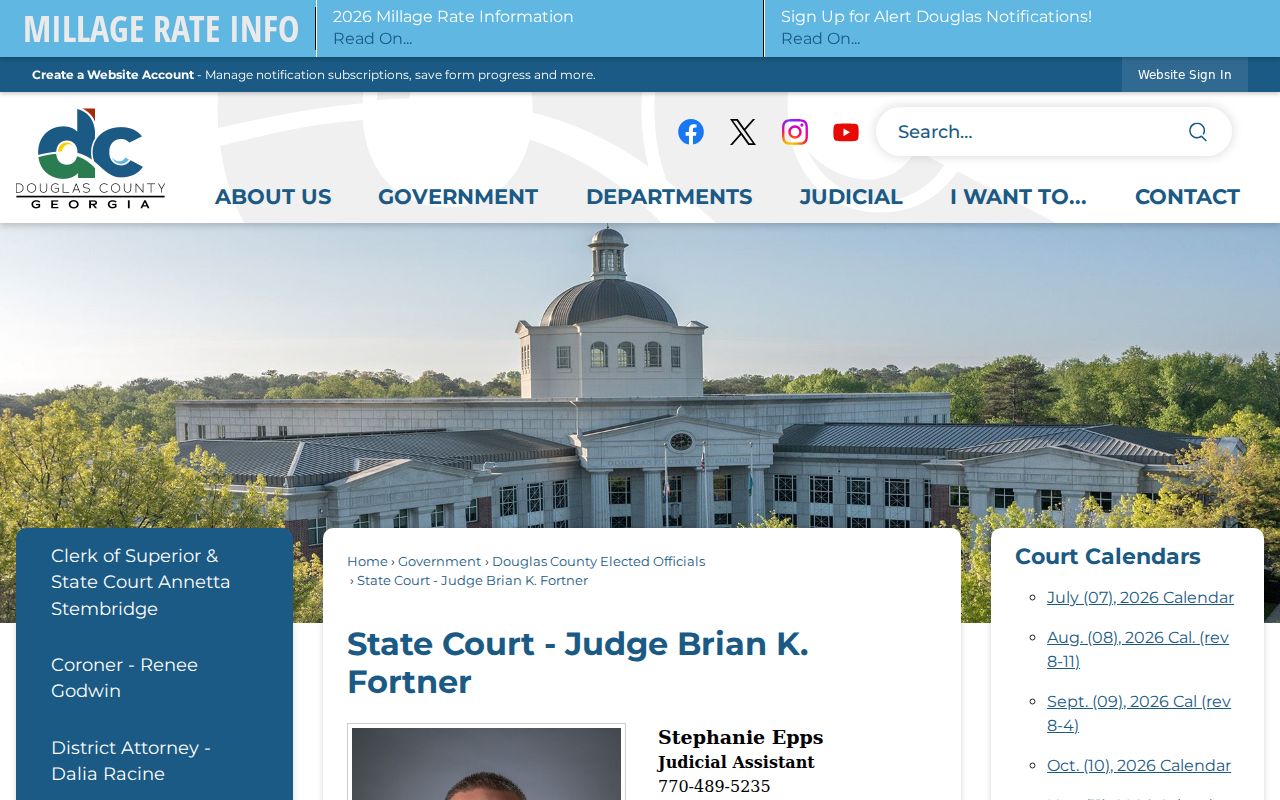
The same page names the local staff and scheduling links. Those help tie a docket search result to the correct criminal calendar.
sentences
short
sentences
short
image_after
What a Criminal Docket Shows
Think of a Douglas County criminal docket as a timeline of court events. Each entry records one step. The charge line tells you what the prosecution alleges, nothing more. A setting shows only that the court scheduled something. A plea entry captures the defendant's answer at that stage. Later come the disposition, which is the outcome, and the sentence, which is the penalty the court orders. Don't mash those layers into a single label, because each one means something different.
Also keep expectations modest when you search the public index. It may show less detail than the full case file held by the clerk. A docket entry marks a procedural event, not proof that the allegations hold up. And a calendar label like arraignment or status hearing is just a hearing type, never a conviction or final result on its own.
| Case Number | The court-issued identifier appears in the portal’s Case # field. Use the full value without guessing a local format. |
|---|---|
| Charge(s) | The alleged offense or offenses, which may include a statutory description and degree. A charge remains an allegation until resolved. |
| Hearing Settings | Scheduled events such as arraignment, case management, motions, calendar call, probation revocation, or trial. |
| Plea | The response entered at a plea stage, such as guilty or not guilty. A calendar label that includes “pleas” is not necessarily the final result. |
| Disposition | The recorded outcome, such as dismissal or conviction, which should be confirmed in the official docket or file. |
| Sentence or Closure | Later action that may include sentencing, fines, probation terms, or closure paperwork. The state-agency record is a separate source. |
Douglas County Criminal Event Terms
Judge Warren's official page, with its January 2026 sample calendar, shows how a Douglas County criminal docket names the work it schedules. Each entry labels a type of event. That is all it does. It does not announce a result or stand in for the case file.
Treat a setting as a task for the court, nothing more. Later it may be continued, completed, or met with another filing. Keep an event, a plea, and a disposition separate in your mind. That is the clean way to read a docket.
- Criminal Case Management Status/Pleas
- A status or plea setting used to organize criminal cases; it is not a final disposition by itself.
- Criminal Arraignment
- A scheduled stage for charges, rights, and plea-related action. The calendar line does not prove what plea was entered.
- Probation Revocation
- A hearing category about alleged noncompliance with probation, distinct from a new criminal accusation.
- Criminal Calendar Call
- A call used to organize cases for trial or further settings. It may affect a later date without deciding guilt.
- Specially Set Criminal Motions
- A designated motion setting that may need a separate order or notice. The docket or file controls the motion’s outcome.
- Drug Court
- A named problem-solving court calendar line. A program entry is not a shorthand for a person’s final case result.
Judge Deah B. Warren's official page hosts the judge-specific calendar materials and criminal assignment context.
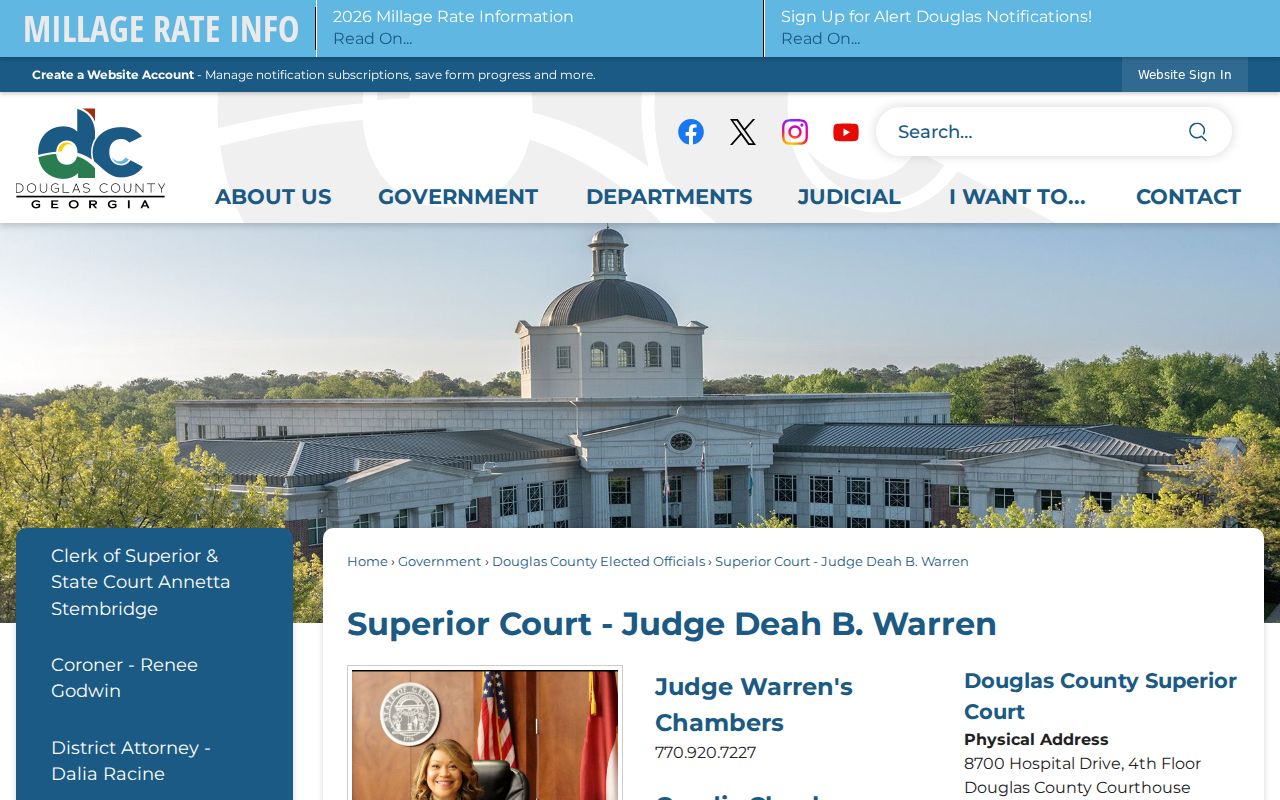
That page is a calendar directory. It is not a sample case, nor a complete register of criminal dispositions.
sentences
short
sentences
short
Stages on a Criminal Docket
One criminal case can pile up many docket entries long before any outcome arrives. The exact order depends on the court, the charge, the plea, any motions, and later review. Still, knowing the basic path explains why a single case lookup returns a string of settings rather than one final answer.
Docket flow: Charge Filed › Arraignment › Pretrial › Plea or Trial › Disposition › Sentencing
One criminal case can generate many docket entries before any outcome arrives. The order varies with the court, charge, plea, motions, and later review. Still, the basic path explains why a single search result lists so many settings.
Douglas County Criminal Calendar Lines
A judge calendar and a case register answer different questions, and Douglas County posts both. Warren's January 2026 sample sorts each setting by weekday, date, time, and judge. Criminal entries there cover case-management status and pleas, arraignments, probation revocations, specially set motions, drug-court staffing, drug court, and calendar calls.
Judge Fortner's page adds its own criminal calendar contact plus an arraignment waiver deadline. Joanne Woods serves as criminal calendar clerk at 770-489-7327 and jwoods@douglascountyga.gov. Any waiver must be filed at least 24 hours before the hearing. Trust the case number and assigned judge over any calendar label.
| Calendar line | What it signals | What it does not establish |
|---|---|---|
| Status/Pleas | Case-management or plea-related work is scheduled. | A final plea or outcome is already entered. |
| Arraignment | An arraignment setting is on the judge’s calendar. | That a waiver was filed or a plea was accepted. |
| Probation Revocation | A probation matter is set for review. | That revocation occurred. |
| Calendar Call | Cases are being organized for later trial or settings. | That a jury trial happened that day. |
Douglas County Criminal Setting Confirmation
A Douglas County criminal calendar sometimes names the event. It can leave out the case number and party name. Match the judge, date, and setting against the public case search before you rely on the PDF. When the case is missing, a current search result, a revised judge calendar, or a clerk confirmation can settle it.
Judge-specific scheduling drives everything here. One calendar call can reset the next setting, and an arraignment waiver carries its own filing deadline. The monthly list is a starting point only. The assigned judge, the Clerk, or your attorney holds the case-specific answers a general docket cannot give.
Which Court Holds Criminal Dockets
Know which court holds the record before you search. Douglas Superior Court holds felony criminal cases. Douglas State Court takes criminal misdemeanors and traffic citations. The records are not interchangeable. A State Court hit, a Superior felony hit, and a city ticket each lead somewhere different.
Magistrate Court handles bond, warrants, and preliminary hearings at the arrest stage. Douglasville, Villa Rica, and Austell Municipal Courts each handle city traffic, ordinance, and certain misdemeanor matters within their authority. A not-guilty municipal case may bind over under that city's rules. Juvenile Court follows its own access rules for youth matters.
Douglas County Criminal Court Routing
Start with the court named on the citation, notice, or case result. The county public search is a key route into Superior and State records, yet it does not index every municipal, juvenile, probate, or Magistrate file. The routing summary that follows keeps your docket search aimed at the court that actually holds the event.
| Court | Criminal work | First search or contact route |
|---|---|---|
| Superior Court | Felony accusations, felony pleas, trials, motions, probation revocations | Douglas public search and Clerk; assigned judge calendar for settings |
| State Court | Criminal misdemeanors and traffic citations | Criminal search with State Court selected; State Court Clerk for case help |
| Magistrate Court | Bond, warrants, and preliminary hearings | Magistrate Court and its Clerk, not a Superior felony result |
| Municipal Court | City traffic, ordinances, and defined misdemeanor matters | Issuing city court or city-linked payment/contact route |
| Juvenile Court | Dependency, delinquency, CHINS, and specified youth traffic | Juvenile Court clerk and its separate record process |
The official Douglas County Juvenile Court page covers youth cases.
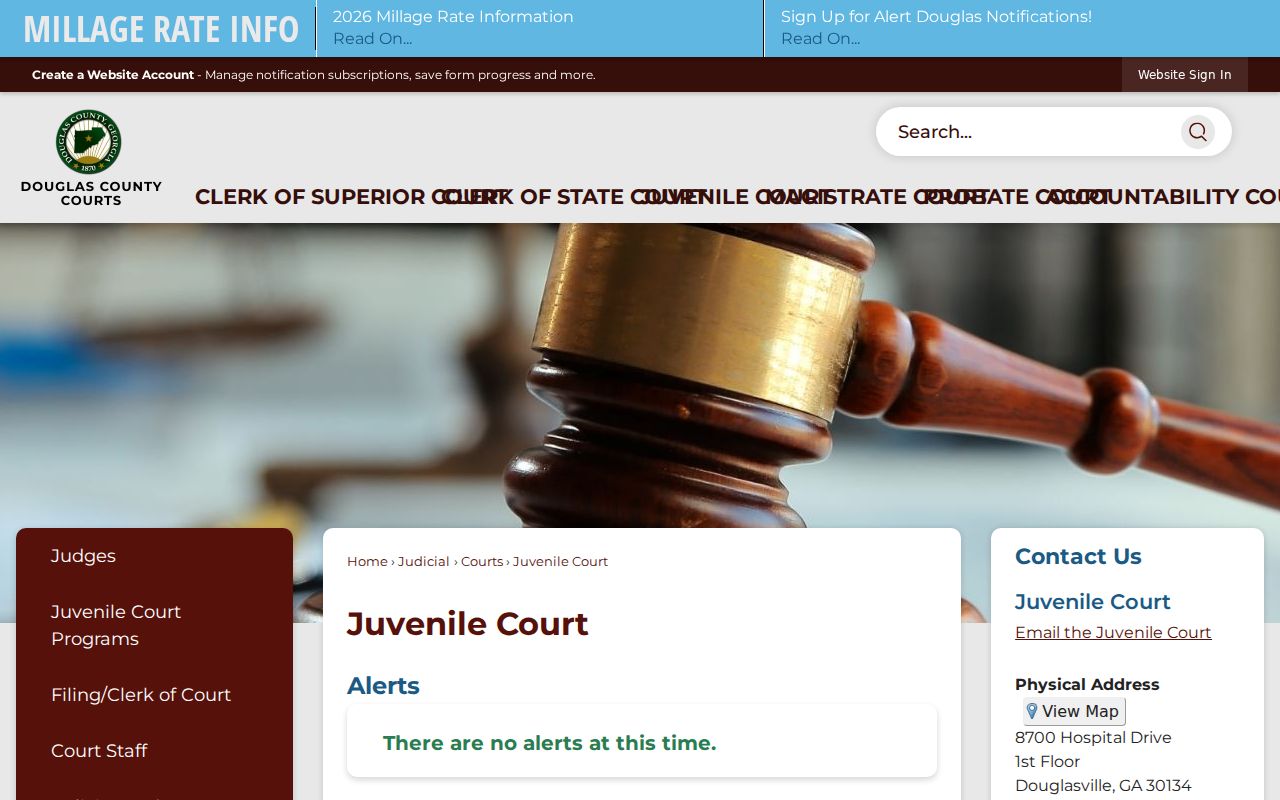
Never infer a juvenile result from an adult criminal search. When no public result appears, the reason for limited access stays undisclosed.
Douglas County Criminal Clerk Desk
The Clerk of Superior and State Courts keeps the docket records and pleadings for both courts. That office assigns case numbers and receives filings. It also maintains each case record, provides public access under the governing rules, and processes fees and closure paperwork. Missing index hit, older document, case-specific setting, or certified copy? The Records Room is the practical county contact.
Clerk’s Records Room
Clerk of Superior and State Courts
8700 Hospital Drive, Douglas County Courthouse, Douglasville, GA 30134
Records Room: 770-920-7441
Monday through Friday, 8:00 a.m. to 5:00 p.m.
The official Magistrate Court page maps the bond and preliminary-hearing route that sits below a Superior felony trial docket.
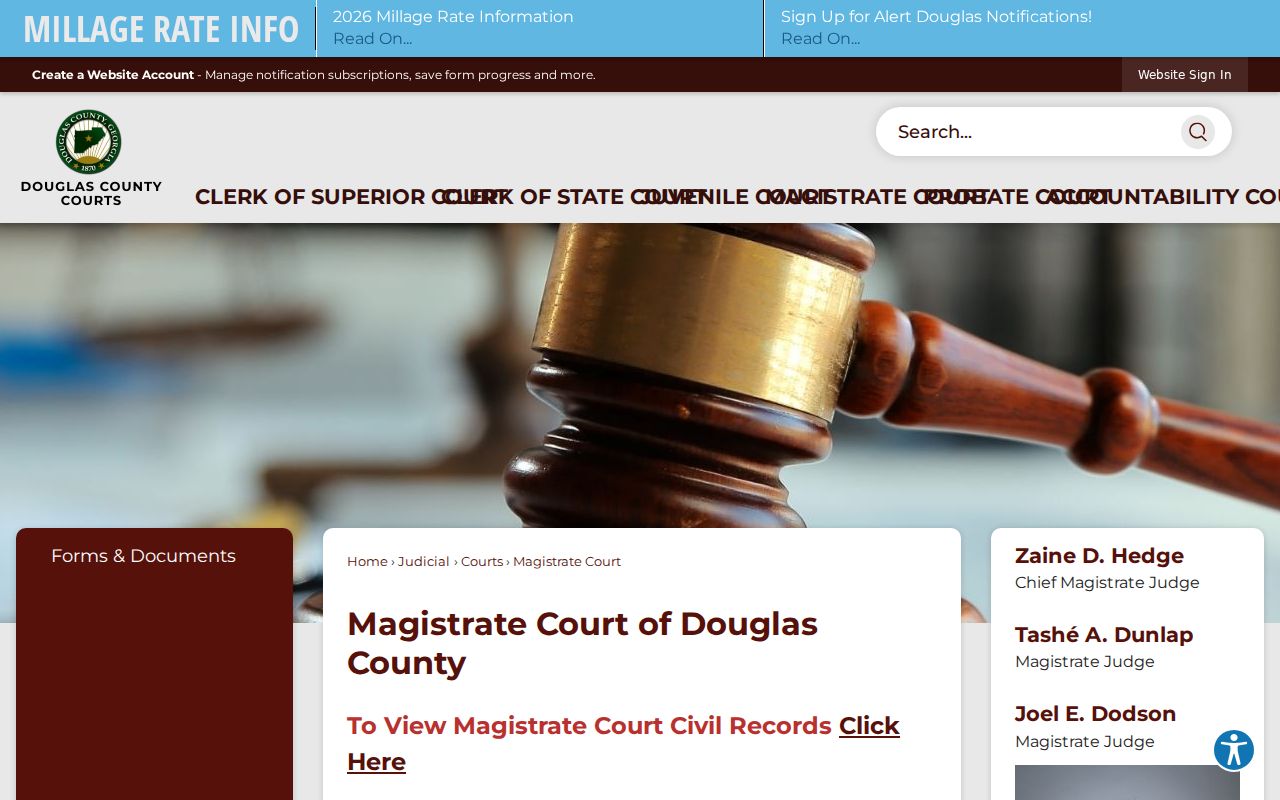
The published Douglas Magistrate schedule lists bond hearings at 8:45 a.m. Monday and 8:30 a.m. Tuesday through Friday. Preliminary hearings sit at 1:30 p.m. Thursday. Confirm your setting with the right court.
Douglas County Criminal Closure Records
Closing paperwork is only one layer of a case record. Per the State Court Clerk, a criminal case that is sentenced or closed may have closure paperwork sent to a state agency. Fines may be collected or disbursed there. A state-agency record, a probation record, the court index, and the Clerk's case file each answer different questions.
Use "charge," "event," "plea," "disposition," and "sentence" with care. A result marked closed or disposed is not a complete certified judgment. Only the official docket or file can say so. If a search comes back empty, check the basics first. Review the court type, name format, filed dates, city issuer, and specialty-court route.
For a formal county administrative record, the Douglas County JustFOIA portal offers an open-records request route. It cannot override a judicial restriction. Nor can it replace the clerk's custody of a criminal case file.
Public Access and Sealed Criminal Dockets
Georgia presumes public access, but "public" does not mean free, instant, complete, unredacted, or searchable by every field. Statutes, court rules, juvenile procedures, protected data, exhibits, and case-specific orders can all limit what you see. A blank result may simply mean the wrong court, a search filter, a separate record system, or a lawful access limit.
Key access rules:
Georgia Open Records Act, O.C.G.A. § 50-18-70 states the public policy favoring open government and public access, subject to exceptions.
O.C.G.A. § 50-18-71 addresses inspection and copying, along with the custodian’s response framework when access or more time is needed.
O.C.G.A. § 50-18-72 contains exemptions and protected categories, so the county cannot promise that every exhibit, personal datum, or juvenile record is open.
Uniform Superior Court Rule 21 treats Superior Court records as public unless law or procedure limits access and permits a judge to restrict identified material by order.
O.C.G.A. § 35-3-37 restriction instructions show an arrest-record restriction process; that process is not a promise that a court docket is altered or erased.
When access counts, ask the Records Room which copy or review route applies. Never publish or guess at a restricted file's contents. A docket entry proves a court event happened. The official record and any certified disposition control the legal meaning of the case.